Mechanical design case study
Freeing the Handlebar
Formal title · A Frame-Mounted Shifter Prototype
Could a mountain bike keep its gears while freeing the handlebar for BMX-style rotation?
01 / The riding constraint
The cable problem began on the bike, not at a desk.
I had ridden mountain bikes to school and on trails since Grade 7. My friends and I wanted to try BMX-style barspins, but the shifter cable still tied the handlebar to the frame. After weeks of assuming that the derailleur would have to come off, I noticed two bottle-cage bolts already built into the frame. What if the shifter moved there instead?
A rider-led mechanical design project that uses existing bottle-cage bosses to relocate the shifter away from the handlebar. My design is now installed on my bike, and I have tested it.
That observation became a five-month design project during Grade 9.
02 / Why the shifter cable was different
Keeping the gears introduced another constraint.
The solutions we found for brake-line rotation did not solve the shifter-routing problem on our bikes.
The shifter was still attached to the handlebar, with a cable leading toward the drivetrain. For our configuration, discussing a brake-line solution left that separate connection unresolved. The design question became whether we could change where the rider operated the gears.
04 / My role
Designer and Project Lead
I identified the cable-routing constraint, designed the frame-mounted shifter, developed the idea with riding friends, and sought feedback from local riders and bike shops. My design is now installed on my bike, and I have tested it.
The project grew through discussion with riding friends. The work shown here includes the installed prototype. Testing is my own account, not an independent safety or performance certification.
05 / Development timeline
A familiar bike, a different question.
Regular riding and practice kept the problem close enough to revisit.
Riding / Grade 7 onward
Commuting, trail riding, and practicing skills made the controls and cable routes familiar.
The constraint / Grade 9
My friends and I wanted to keep our gears while experimenting with handlebar rotation. For weeks, removing the drivetrain seemed like the only option we had.
The insight
Two existing bottle-cage bosses suggested an attachment point for a bracket and a relocated shifter.
Developing the idea
I discussed the design with riding friends and sought input from local riders and bike shops. The project extended over about five months during Grade 9.
Installed and tested
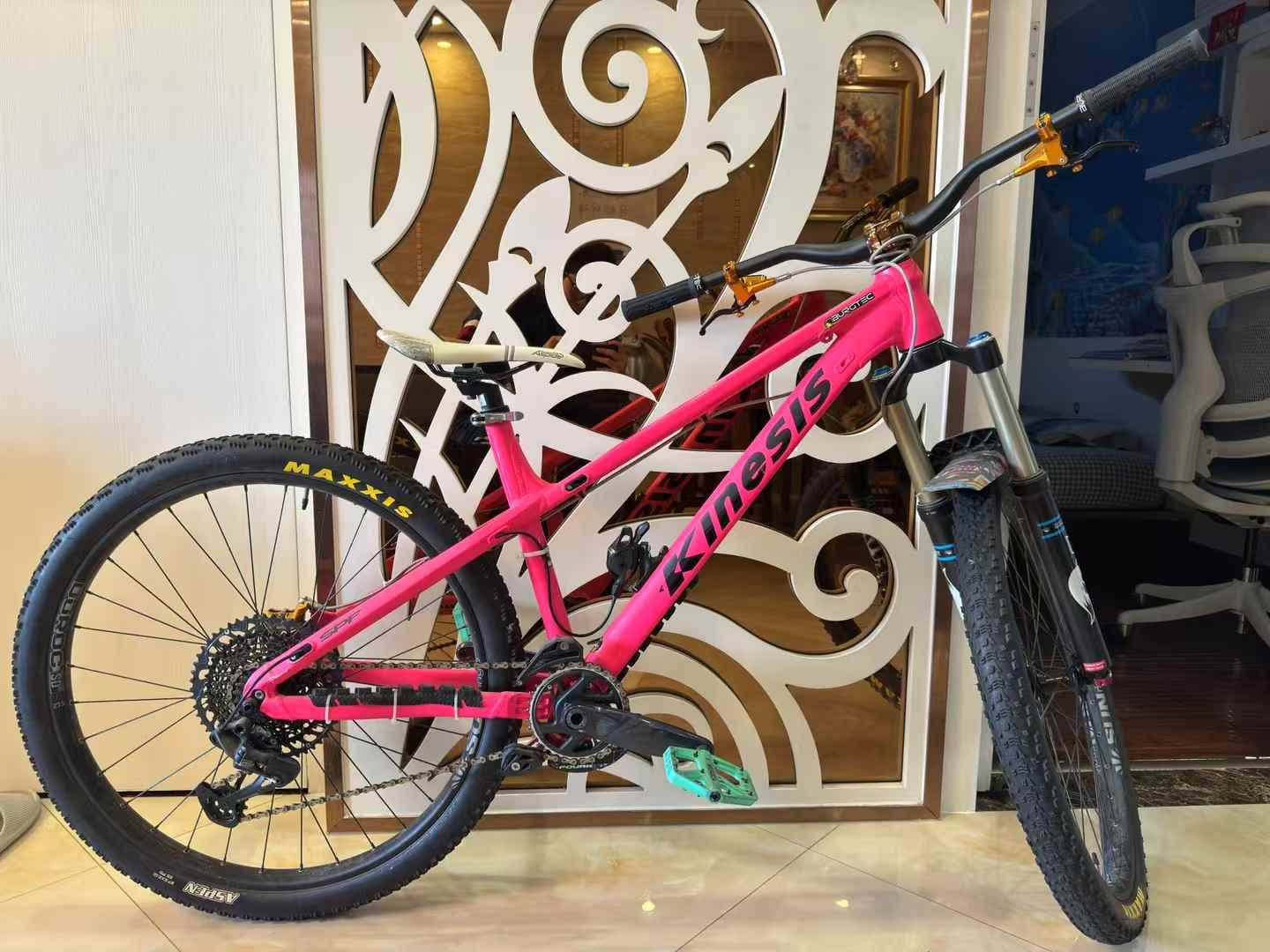
My shifter design is now installed on the bike, and I have tested it. The photograph below shows the installed setup.
06 / Feedback from riders and shops
Take the idea back to people who know the bike.
My friends and I contacted experienced local riders and bike shops to discuss the idea. Those conversations were part of developing the concept, rather than a formal test program.
I do not have a verified record of specific recommendations or a safety endorsement to present here. The validation questions below still need documented answers.
07 / Design logic
Move the control, not the entire drivetrain.
The frame becomes the anchor. This concept drawing explains the routing idea; it is not a measured drawing of the installed hardware.
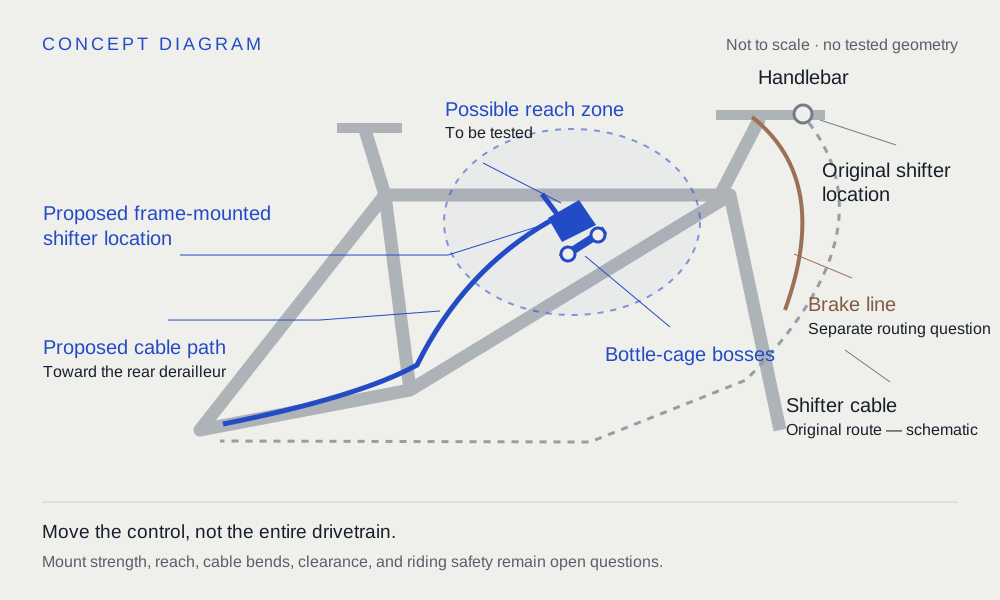
- Handlebar & original shifter
- The original control rotates with the handlebar; its cable leads back to the frame.
- Brake line
- A separate routing constraint. This concept drawing does not specify a brake modification.
- Bottle-cage bosses & proposed location
- The two existing bosses are the proposed bracket anchor, with the shifter placed on the frame.
- Cable path & possible reach
- The proposed route runs toward the rear derailleur. Bend radius, rider reach, and rotation clearance still require checks.
08 / The installed prototype
From the mounting idea to my bike.
This is my shifter design, installed on my bike. I have also tested it. The photograph shows the installation; it does not establish how the mechanism performs across different conditions.
The scope and results of testing are not yet documented on this site. I am not claiming proven safety, universal compatibility, commercial readiness, or first-ever novelty.
09 / Later versions by the team
One original bracket, more bikes through the team.
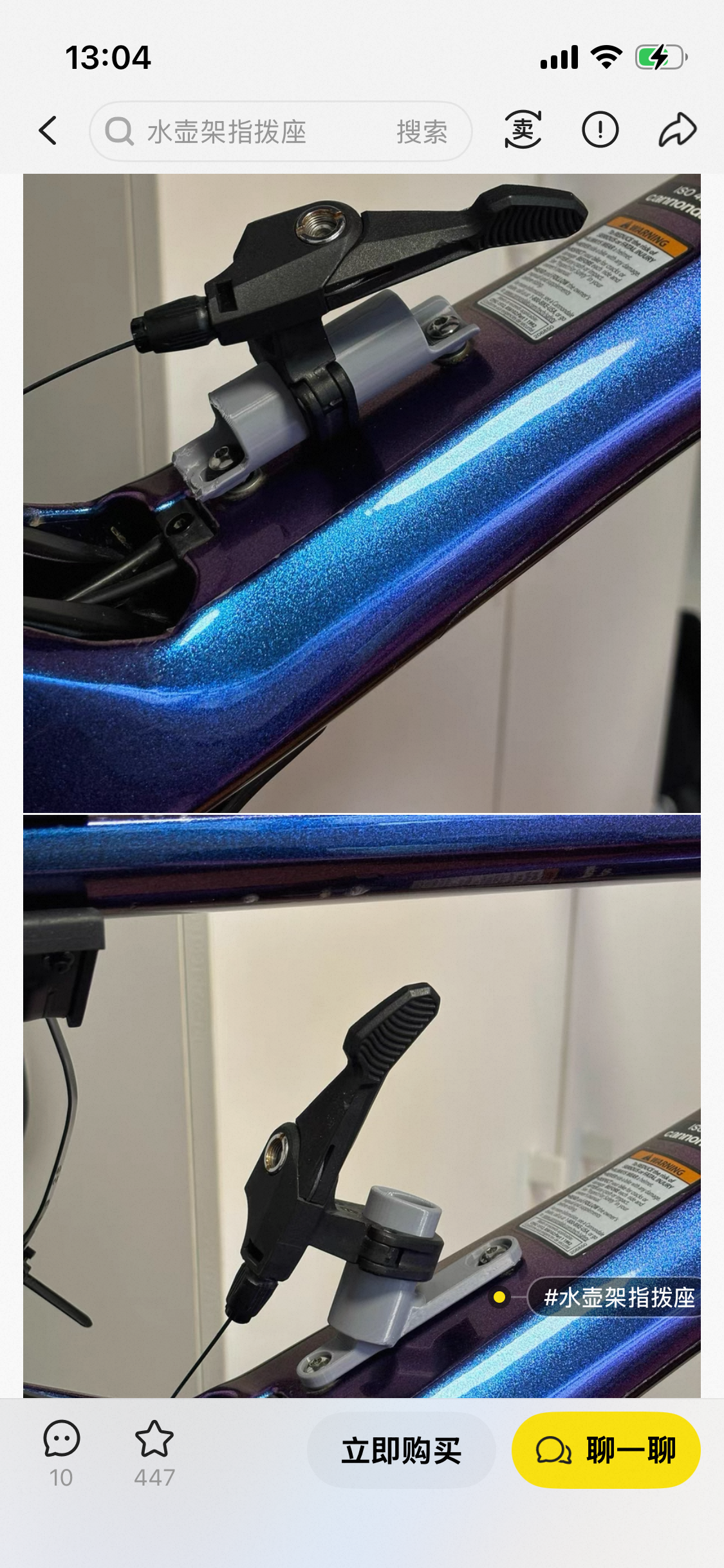
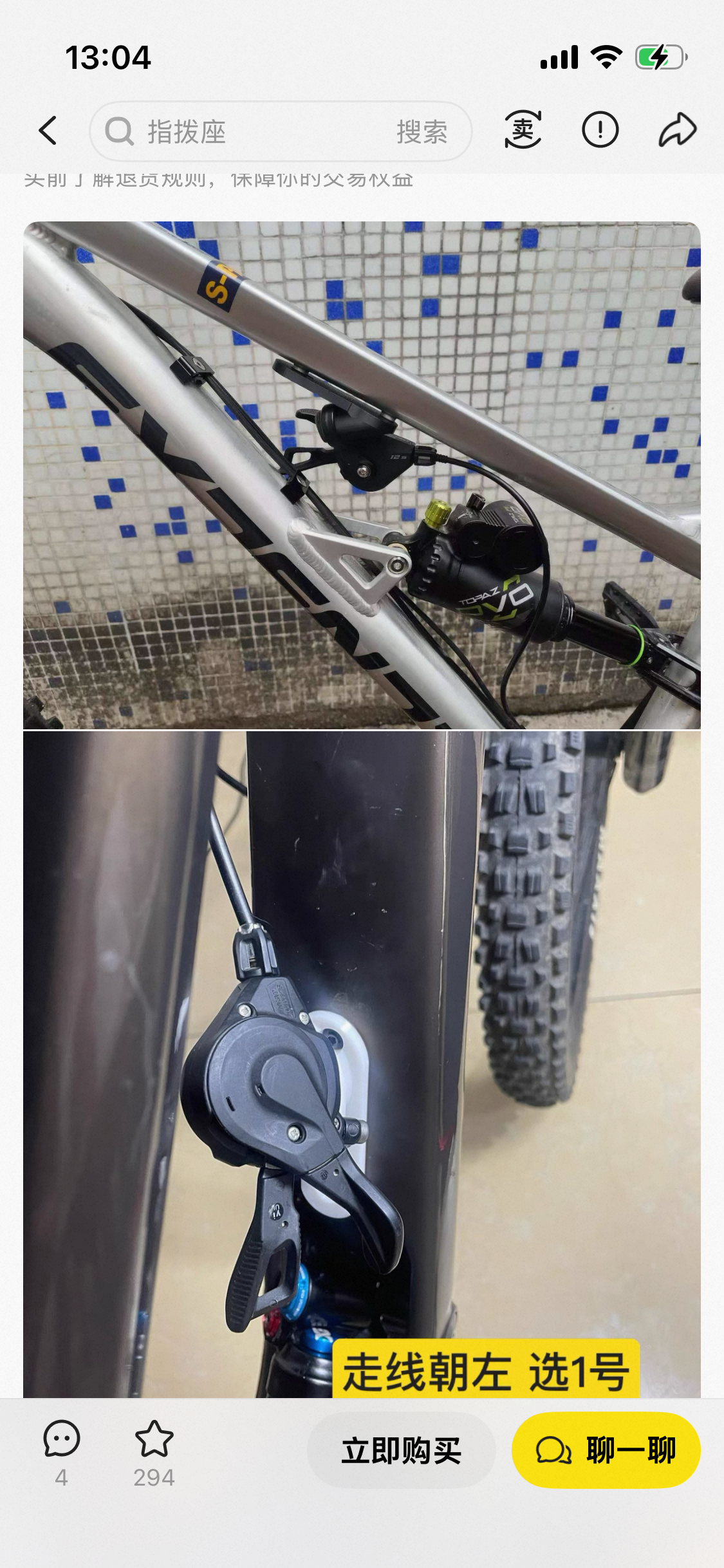
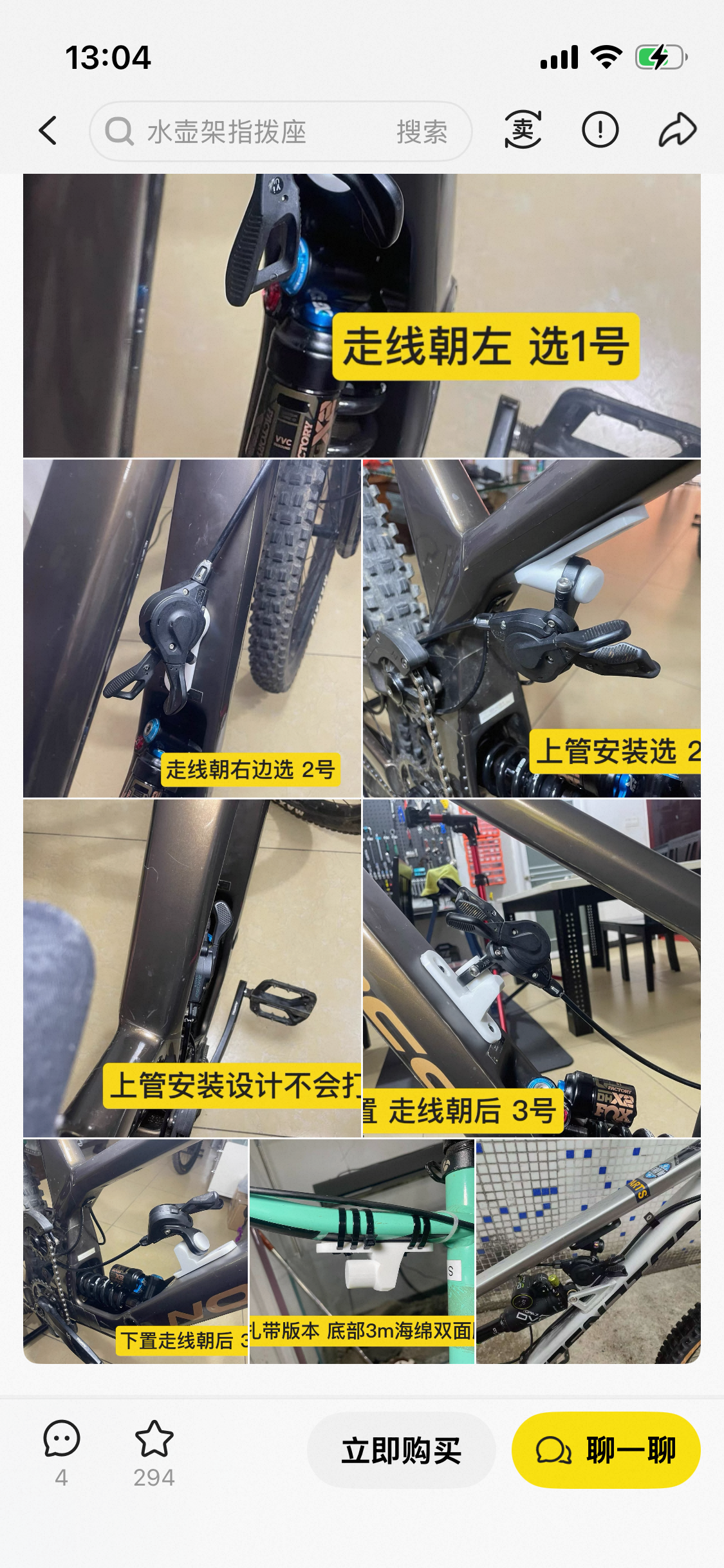
I designed the original frame-mounted shifter bracket. Our cycling team then developed later versions based on that design to suit different bikes and installation layouts.
These team-developed versions have been listed for sale on Xianyu. The screenshots below show the later mounting and cable-routing configurations.
The original design is mine; the later adaptations are the team’s work. These listings do not supply the testing conditions or results for my installed prototype.
 View full size (opens in a new tab)
 View full size (opens in a new tab)
 View full size (opens in a new tab)
10 / Tradeoffs and safety questions
A useful idea still has to survive reach, friction, impact, and safety.
Moving the shifter could change when and how a rider reaches the control. A frame position might expose the bracket to knees or impacts, create tighter cable bends, or interfere with other equipment.
Boss spacing alone would not establish frame compatibility or adequate mounting strength. Brake routing and the rest of the bicycle also need review as part of a systematic safety assessment.